Assemblage, Expédition et Support de toutes les commandes depuis l'Union Européenne
Assemblage, Expédition et Support de toutes les commandes depuis l'Union Européenne
Assemblage, Expédition et Support de toutes les commandes depuis l'Union Européenne
Broadberry conçoit des infrastructures réseau IA pour les environnements où les GPU, le stockage et les systèmes distribués doivent communiquer à haut débit et à faible latence.
Les charges de travail IA imposent au réseau des exigences différentes de celles des applications d’entreprise traditionnelles. L’entraînement IA à grande échelle, l’inférence distribuée et les clusters GPU nécessitent des transferts de données à haut débit, une communication inter-nœuds rapide et une montée en charge prévisible sur l’ensemble de l’infrastructure..
Des AI PODs aux AI factories, Broadberry conçoit des architectures réseau adaptées aux exigences applicatives, à la taille des clusters et aux objectifs de performance. En tant que Partenaire NVIDIA Elite, Broadberry est accrédité pour concevoir et intégrer des infrastructures IA, notamment des AI PODs et des AI factories pour les environnements d’entreprise, IA et HPC.
Se Connecter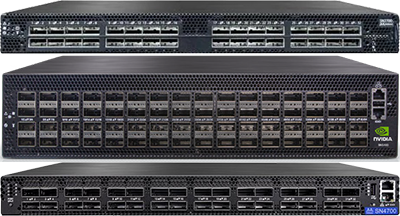

NVIDIA Spectrum-2 based 25GbE/100GbE 1U Open Ethernet switch with Cumulus Linux, 48 SFP28 ports and 12 QSFP28

NVIDIA Spectrum-2 based 25GbE/100GbE 1U Open Ethernet switch with Cumulus Linux, 48 SFP28 ports and 12 QSFP28
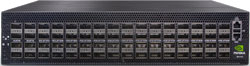
NVIDIA Spectrum-3 based 100GbE 2U Open Ethernet switch with Cumulus Linux, 64 QSFP28 ports, 2 Power Supplies (AC), x86 CPU, standard depth, C2P airflow, Rail Kit
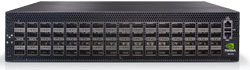
NVIDIA Spectrum-3 based 100GbE 2U Open Ethernet switch with Cumulus Linux, 64 QSFP28 ports, 2 Power Supplies (AC), x86 CPU, standard depth, P2C airflow, Rail Kit
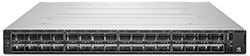
NVIDIA Quantum 2 based NDR InfiniBand Switch, 64 NDR ports, 32 OSFP ports, 2 Power Supplies (AC), Standard depth, Unmanaged, P2C airflow, Rail Kit
NVIDIA Quantum 2 based NDR InfiniBand Switch, 64 NDR ports, 32 OSFP ports, 2 Power Supplies (AC), Standard depth, Unmanaged, P2C airflow, Rail Kit
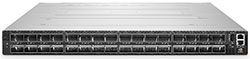
NVIDIA Quantum 2 based NDR InfiniBand Switch, 64 NDR ports, 32 OSFP ports, 2 Power Supplies (AC), Standard depth, Managed, P2C airflow, Rail Kit
NVIDIA Quantum 2 based NDR InfiniBand Switch, 64 NDR ports, 32 OSFP ports, 2 Power Supplies (AC), Standard depth, Managed, C2P airflow, Rail Kit

NVIDIA Spectrum-3 based 400GbE 1U Open Ethernet Switch with Cumulus Linux, 32 QSFPDD ports, 2 Power Supplies (AC), x86 CPU, standard depth, P2C airflow, Rail Kit

NVIDIA Spectrum-3 based 400GbE 1U Open Ethernet Switch with Cumulus Linux, 32 QSFPDD ports, 2 Power Supplies (AC), x86 CPU, standard depth, C2P airflow, Rail Kit
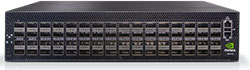
NVIDIA Spectrum-4 based 400GbE 2U Open Ethernet switch with Cumulus Linux Authentication, 64 QSFP56-DD ports and 2 SFP28 ports, 2 power supplies (AC), x86 CPU, Secure-boot, standard depth, Power-to-Connector airflow, Tool-less Rail Kit
NVIDIA Spectrum-4 based 400GbE 2U Open Ethernet switch with Cumulus Linux Authentication, 64 QSFP56-DD ports and 2 SFP28 ports, 2 power supplies (AC), x86 CPU, Secure-boot, standard depth, Connector-to-Power airflow, Tool-less Rail Kit
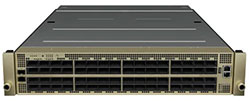
NVIDIA Spectrum-4 based 800GbE 2U Open Ethernet switch with Cumulus Linux Authentication, 64 OSFP ports and 2 SFP28 ports, 4 AC PSUs, Secure-boot, standard depth, Connector-to-Power Airflow, Tool-less Rail Kit
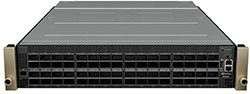
NVIDIA Spectrum-4 based 800GbE 2U Open Ethernet switch with Cumulus Linux Authentication, 64 OSFP ports and 1 SFP28 port, MGX Mount with Busbar, x86 CPU, Secure-boot, standard depth, Connector-to-Power Airflow, Tool-less Rail Kit
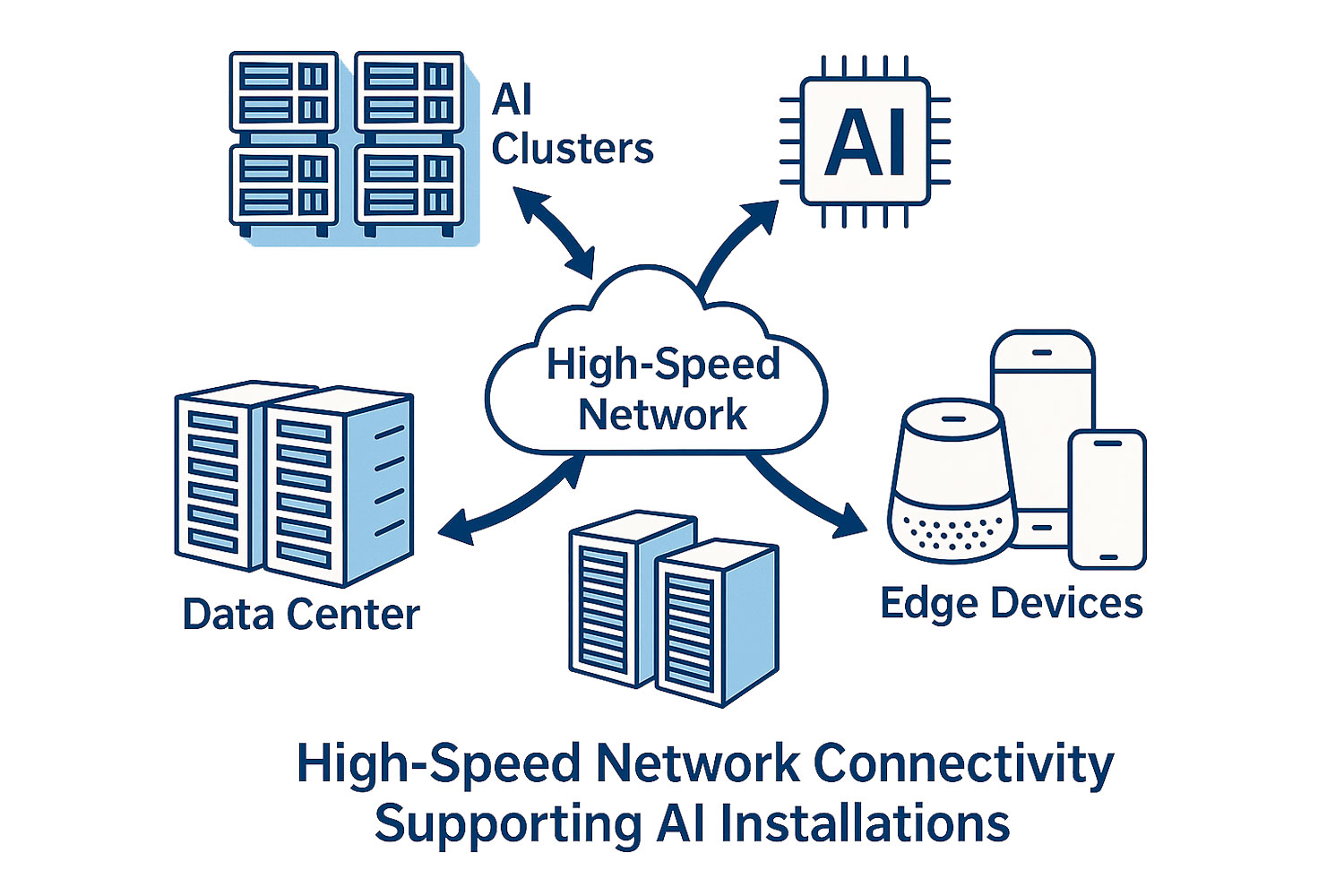
Le réseau IA désigne les interconnexions haute performance et les architectures réseau qui permettent la communication entre les GPU, les serveurs, les systèmes de stockage et les environnements edge.
Contrairement aux réseaux d’entreprise traditionnels, le réseau IA doit prendre en charge :
La performance dépend de la manière dont le calcul, le stockage et le réseau fonctionnent ensemble comme un système unifié. Lorsque le réseau devient un goulet d’étranglement, même les GPU et accélérateurs les plus puissants ne peuvent pas fonctionner à leur niveau d’efficacité maximal.
Pourquoi le réseau est-il important pour les charges de travail IA ?
Les charges de travail IA reposent sur des transferts de données rapides entre les GPU, les systèmes de stockage et les nœuds de calcul. De mauvaises performances réseau peuvent laisser les GPU en attente de données ou de communications entre nœuds, ralentissant les charges d’entraînement et d’inférence IA.
Quelle est la différence entre le réseau IA et le réseau d’entreprise traditionnel ?
Le réseau IA privilégie la faible latence, le haut débit et la communication distribuée entre systèmes, tandis que le réseau d’entreprise traditionnel est généralement conçu pour des applications métier transactionnelles.
Quelles sont les causes des goulets d’étranglement réseau dans les environnements IA ?
Les goulets d’étranglement courants incluent une bande passante insuffisante, la congestion réseau, une communication inter-nœuds lente et une montée en charge inefficace dans les environnements GPU distribués.

Les charges IA modernes fonctionnent rarement sur un seul système. Elles s’appuient sur des clusters de GPU, TPU et autres accélérateurs répartis sur plusieurs serveurs. Ces environnements exigent une communication inter-nœuds continue et rapide pour l’entraînement IA à grande échelle et le traitement parallèle.

Santé, automatisation industrielle, systèmes autonomes, analytique IoT et services financiers exigent des systèmes IA réactifs en temps réel, où la performance réseau impacte directement les résultats.

Les déploiements IA combinent de plus en plus infrastructure sur site, cloud et équipements edge. Le réseau haute performance leur permet de fonctionner ensemble efficacement.

Les modèles IA gagnent en taille et en complexité, augmentant les besoins en bande passante, latence et évolutivité réseau. Les architectures doivent s’étendre sans devenir un goulet d’étranglement.
Broadberry fournit des infrastructures réseau IA dans le cadre d’environnements IA, HPC et accélérés par GPU entièrement intégrés.
Les capacités incluent :
Broadberry travaille avec ses clients pour évaluer le comportement des charges de travail, les besoins de montée en charge et les objectifs de performance afin de déterminer l’architecture réseau la plus adaptée à leur environnement.
À quoi sert InfiniBand ?
InfiniBand est couramment utilisé dans les environnements d’entraînement IA et HPC qui nécessitent une ultra-faible latence, une bande passante élevée et une communication rapide entre clusters GPU et nœuds de calcul.
Quel réseau est requis pour l’entraînement IA ?
Les environnements d’entraînement IA nécessitent généralement un réseau à haut débit et faible latence, capable de prendre en charge la communication GPU distribuée, le traitement parallèle et les transferts rapides de données entre systèmes de calcul et de stockage.
Le réseau peut-il limiter les performances GPU ?
Oui. Une bande passante insuffisante ou une latence réseau élevée peut laisser les GPU en attente de données ou de communications entre nœuds, réduisant l’efficacité globale de l’entraînement et les performances du système.
Qu’est-ce que la latence réseau ?
La latence réseau correspond au temps nécessaire aux données pour circuler entre systèmes ou nœuds. Une faible latence est critique pour les charges de travail IA distribuées qui reposent sur une communication constante entre GPU et serveurs.
Quelle est la différence entre NVLink et InfiniBand ?
NVLink est une interconnexion GPU-à-GPU haut débit utilisée au sein de systèmes fortement couplés, tandis qu’InfiniBand est une fabrique réseau conçue pour la communication entre plusieurs serveurs et clusters IA distribués.
Quelle bande passante l’entraînement IA nécessite-t-il ?
Les besoins en bande passante dépendent de la taille du modèle, du volume des jeux de données et du nombre de GPU impliqués. Les environnements d’entraînement IA à grande échelle nécessitent souvent des réseaux 100GbE, 200GbE, 400GbE ou InfiniBand.
Quand le réseau IA doit-il évoluer horizontalement ?
Le réseau IA doit évoluer horizontalement lorsque les clusters GPU, les jeux de données ou les charges distribuées dépassent les capacités d’un système unique ou d’une fabrique réseau unique.
Quel est le rôle du réseau dans une AI factory ?
Le réseau connecte les GPU, le stockage et les ressources de calcul au sein de l’AI factory, permettant des transferts de données à haut débit, l’entraînement distribué et une montée en charge efficace des charges de travail IA.
Le réseau IA doit-il fonctionner sur Ethernet ou InfiniBand ?
Le bon choix dépend des exigences applicatives, des objectifs de performance, des besoins de montée en charge et du budget. InfiniBand est couramment utilisé pour l’entraînement IA à grande échelle et les environnements HPC, tandis qu’Ethernet est souvent utilisé pour des déploiements d’infrastructure plus flexibles ou mixtes.
Broadberry travaille avec ses clients pour évaluer ces compromis et déterminer l’architecture réseau la plus adaptée à leur environnement IA.

 Notre Procédure de Tests rigoureuse
Avant de quitter nos ateliers, toutes les solutions de serveur et de stockage Broadberry sont soumises à une procédure de test rigoureuse de 48 heures. Ceci, associé à un choix de composants de haute qualité, garantit que toutes nos serveurs et solutions de stockage répondent aux normes de qualité les plus strictes qui nous sont imposées.
 Une Flexibilité Inégalée
Notre principal objectif est d'offrir des serveurs et des solutions de stockage de la plus haute qualité. Nous comprenons que chaque entreprise a des exigences différentes et sommes en mesure d'offrir une flexibilité inégalée dans la personnalisation et la conception de serveurs et de solutions de stockage.
Nous nous sommes imposés comme un incontournable fournisseur de stockage en Europe et fournissons depuis 1989 nos solutions de serveurs et de stockage aux plus grandes marques mondiales. Quelques exemples de clients :


impressum / returns / Mon compte / Contactez-nous / new accounts
CyberServe EPYC EP1-102A
A powerful AMD EPYC rack server for small spaces...
| August 26, 2026
CyberServe Ryzen RY1-104A
A core-heavy Ryzen rack server at an entry-level price ...
| April 01, 2024
CyberServe Xeon SP1-102G NVMe G5
A small, powerful, and affordable rack server.
Broadberry gets edgy with a great value rack server...
| December 01, 2023
Intel M50CYP2UR208 Coyote Pass Server - 8 Drive Bays. SAS/SATA/NVME
A mighty server package for the price with a big helping of blisteringly fast Intel Optane 200 PMEMs...
| August 02, 2021
 Appelez notre équipe commerciale française maintenant